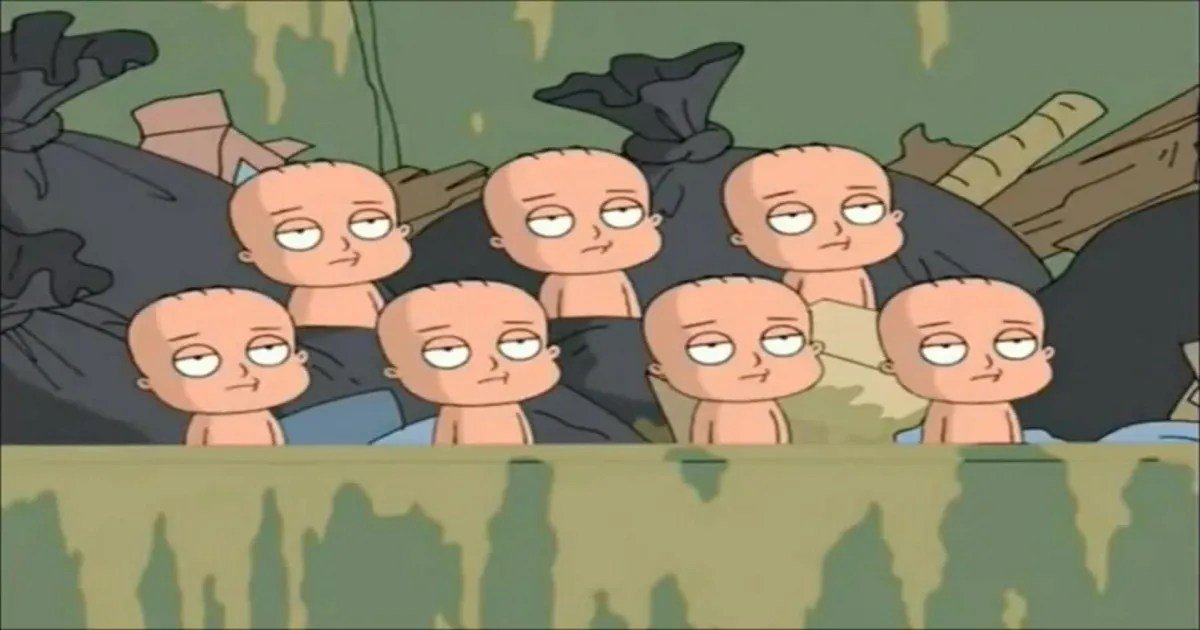
For over two decades, Family Guy has been a masterclass in pushing buttons, provoking thought, and often, igniting full-blown outrage. From sacrilegious takes on religious figures to deeply uncomfortable explorations of sexuality, its 'Most Controversial & Boundary-Pushing Family Guy Episodes' have become etched in pop culture history, defining its unapologetic brand of humor. This isn't just about fleeting shock value; it's about a show that consistently dares to poke fun at the sensitive, the sacred, and the status quo, often inviting a firestorm of criticism in its wake. But what exactly makes an episode "controversial" in the world of Quahog, and how has the show managed to thrive despite—or perhaps because of—its penchant for controversy?
At a Glance: Unpacking Family Guy's Most Divisive Moments
- Boundary-Pushing Humor: Discover how Family Guy consistently challenges societal norms and taboos, from religious satire to explorations of sexuality.
- The Outrage Spectrum: Understand the varying levels of controversy, from network bans and lawsuits to widespread fan and critical backlash.
- Creator's Perspective: Gain insight into how showrunner Seth MacFarlane and his team often defend their creative choices, even amidst severe criticism.
- Evolving Sensibilities: Explore how certain episodes, while controversial at the time, might be viewed differently through today's lens.
- The Show's Enduring Appeal: Learn why, despite the uproar, Family Guy maintains a loyal fanbase and remains a cultural phenomenon.
The Unapologetic Legacy: How Family Guy Redefined Animated Comedy
When Family Guy first premiered in 1999, it quickly distinguished itself from its animated peers. Created by Seth MacFarlane, the series introduced us to the dysfunctional Griffin family—Peter, Lois, Meg, Chris, Stewie, and Brian—living their surreal lives in the fictional city of Quahog, Rhode Island. The show quickly became renowned for its lightning-fast cutaway gags, meta-humor, and an often-crude sensibility that didn't shy away from sensitive subjects.
While initially canceled in 2002, an unprecedented surge in DVD sales and strong syndication ratings led to its revival in 2005, cementing its place as a cultural touchstone. This comeback only emboldened its creators, allowing Family Guy to push its comedic boundaries further, turning controversy not just into an occasional occurrence but a defining characteristic. The show isn't afraid to upset, to challenge, or even to outright offend, leading to a long list of episodes that sparked widespread debate and outrage.
When Satire Meets the Sacred: Testing Religious and Cultural Waters
Some of Family Guy's most intense backlash has stemmed from its willingness to lampoon religious figures, traditions, and cultural sensitivities with a bluntness rarely seen on mainstream television. These episodes often force viewers to confront their own comfort levels with satire.
The 2000-Year-Old Virgin (Season 13, Episode 6)
This episode stands as a prime example of Family Guy's willingness to directly challenge religious iconography. It depicts Jesus Christ as a virgin who, after being discovered by Peter, tricks him into letting him sleep with Lois. The storyline itself, with Jesus portrayed as manipulative and sexually motivated, immediately sparked debate. Many viewers found it deeply disrespectful and sacrilegious, arguing that the humor crossed a line from satire into outright offense against core religious beliefs. The controversy highlighted the ongoing tension between comedic freedom and religious reverence.
When You Wish Upon a Weinstein (Season 3, Episode 22)
Long before its eventual airing, "When You Wish Upon a Weinstein" became infamous for nearly being shelved entirely. In this episode, Peter, convinced that Jewish people are inherently good with money, tries to find a Jewish person to manage his finances and even attempts to convert Chris to Judaism. Fox initially refused to air it in 2000 due to significant fears of an antisemitism backlash, eventually releasing it on DVD. The line "I Need a Jew," sung by Peter, led to a lawsuit from music publisher Bourne Co., claiming copyright infringement and offense. While Family Guy creators ultimately won, the legal battle and network hesitation underscored the episode's highly sensitive nature regarding religious and ethnic stereotypes.
Turban Cowboy (Season 11, Episode 15)
"Turban Cowboy" found itself at the epicenter of two distinct but equally potent controversies. The episode follows Peter as he befriends a Muslim man who is, unbeknownst to Peter, part of a terrorist plot. It was widely criticized for what many perceived as insensitive jokes about Muslims and their culture, leaning into harmful stereotypes.
However, the episode's infamy escalated dramatically when a cutaway gag depicting Peter running over a crowd during the Boston Marathon was broadcast just days after the actual 2013 Boston Marathon bombing. This tragic coincidence led to widespread accusations of insensitivity, with many believing the show had intentionally exploited the real-life tragedy, despite the episode having aired prior to the event itself. The creators swiftly removed the segment from subsequent airings and online platforms, but the damage to public perception was already done.
Dark Humor & Shock Value: When the Jokes Go Too Far
Family Guy has never shied away from the grotesque or the profoundly unsettling, often using these elements for shock value or to make a dark comedic point. Sometimes, however, the humor is lost in the sheer discomfort it generates.
Road to the North Pole (Season 9, Episode 7)
This Christmas-themed "Road to..." episode is a stark departure from typical holiday cheer. Stewie and Brian's journey to the North Pole culminates in a gruesome depiction of Santa's workshop: a dilapidated, industrial factory where deformed, enslaved elves toil until they die, only to be eaten by feral, starved reindeer. The imagery is deliberately disturbing, transforming a beloved childhood myth into a horrific industrial nightmare. Critics and viewers alike were shocked by its dark and cynical portrayal of Christmas, finding it less humorous and more genuinely unsettling, challenging the boundaries of what is acceptable in a holiday special.
Boys & Squirrels (Season 19, Episode 3)
This episode delivered a brutal moment that caught many fans completely off guard. After Peter accidentally injures himself with a chainsaw, Chris and Stewie find and raise an orphaned squirrel. The seemingly heartwarming storyline takes a sudden, dark turn when Brian, known for his anthropomorphic intelligence and loyalty, viciously attacks and mauls the squirrel to death. The scene was intentionally jarring, serving as a visceral reminder of Brian's underlying animal instincts and shocking viewers with its graphic and unexpected violence against a seemingly innocent creature. It became a water cooler moment, demonstrating the show's capacity for sudden, jarring shifts in tone.
Stewie is Enceinte (Season 13, Episode 12)
"Stewie is Enceinte" (meaning "pregnant" in French) is often cited as one of Family Guy's most uncomfortable and universally disliked episodes. The premise sees Stewie, through a bizarre scientific experiment, become pregnant and eventually give birth to grotesque dog/baby hybrids with Brian. The concept itself was widely considered gross and offensive, alienating "pretty much everyone" who watched it. The episode pushed boundaries not through satire, but through sheer biological discomfort and a deeply unsettling central premise that many found difficult to stomach, earning it a reputation as one of the worst and most cringe-worthy moments in the show's history.
Social Commentary Gone Awry: Missteps in Handling Sensitive Topics
When Family Guy attempts social commentary, it often does so with a sledgehammer rather than a scalpel. While sometimes effective, this approach can lead to misinterpretations or accusations of insensitivity when tackling delicate social issues.
Quagmire's Dad (Season 8, Episode 18)
This episode introduced Quagmire's father, Dan, who reveals that he is transsexual and transitions into Ida. While the episode attempted to explore themes of gender identity, it was met with significant criticism, particularly for Brian's reactions. His transphobic remarks and persistent discomfort were seen by many as insensitive and perpetuating harmful stereotypes, rather than genuinely exploring the nuances of being transgender. Creator Seth MacFarlane defended the episode, stating it was written by Steve Callaghan, whose own father had transitioned, implying an attempt at authenticity. However, the execution left many feeling the show had stumbled in its attempt to be progressive, instead reinforcing prejudice.
Screams of Silence: The Story of Brenda Q (Season 11, Episode 11)
This episode centered on Brenda, Quagmire's sister, and her abusive relationship with her boyfriend, Jeff. While depicting domestic violence is a sensitive topic, the controversy arose from the show's handling of it. Critics argued that the episode often poked fun at Brenda, the victim, through various gags and reactions, without applying the same satirical lens to Jeff, the assailant. This perceived imbalance led to widespread criticism that Family Guy mishandled a serious subject, appearing to trivialize or even blame the victim rather than offering a nuanced or truly impactful commentary on domestic abuse.
Seahorse Seashell Party (Season 10, Episode 2)
"Seahorse Seashell Party" zeroes in on the persistent mistreatment of Meg Griffin, a long-running gag throughout the series. The episode attempts to address the family's relentless abuse of Meg, only to conclude with Meg accepting her role as the family's scapegoat in order to maintain familial peace. This resolution was widely seen as highly problematic and disturbing. Rather than offering any form of justice or a change in behavior, the episode seemingly validated the abuse, implying that Meg’s suffering was a necessary sacrifice for the family's dysfunctional harmony. This conclusion sparked controversy for its bleak and disturbing take on abuse and its psychological impact.
Sexual Themes & Discomfort: Crossing the Line with Intimacy
Sexual humor is a staple of Family Guy, but there are instances where the show delves into themes that many find deeply uncomfortable or inappropriate, particularly when bordering on exploitation or pedophilia.
Con Heiress (Season 17, Episode 8)
"Con Heiress" plunged into profoundly uncomfortable territory with its references to pedophilia. The episode featured Herbert, a recurring character known for his attraction to young boys, mistaking Peter for a child. This setup alone caused significant discomfort. However, the controversy escalated when Chris, Peter's teenage son, became jealous of Herbert's attention towards Peter, leading to an argument between Peter and Chris over who Herbert would prefer. This bizarre and unsettling dynamic created extreme discomfort among audiences, who felt the show had gone too far in turning a serious issue into a comedic plot point.
Partial Terms of Endearment (Season 8, Episode 11)
Few Family Guy episodes have faced the same level of censorship and public outcry as "Partial Terms of Endearment." In this episode, Lois agrees to be a surrogate for a couple. When the biological parents die, Lois and Peter are left to contemplate abortion. The narrative sees Lois ultimately deciding to proceed with the abortion, despite Peter being swayed by an anti-abortion video. Its highly contentious theme led to it being pulled from TV channels entirely, and it has primarily been available on Season 8 DVDs. The episode directly tackled the polarizing topic of abortion with a frankness that broadcast television was unwilling to permit, making it one of the show's most controversial and inaccessible entries.
Quagmire's Mom (Season 10, Episode 12)
This episode injected humor into a situation involving statutory rape, a move that many viewers found incredibly offensive and irresponsible. The plotline centered on Quagmire’s mother engaging in a relationship with a high school student. The Parents Television Council (PTC), a frequent critic of Family Guy, notably lodged a complaint with the FCC about its content, citing its normalization of such a serious crime for comedic purposes. The episode underscored the show’s willingness to push societal norms around sexuality and age, even at the risk of widespread condemnation.
Character Fates & Fan Backlash: The Audience's Own Boundaries
Sometimes, the controversy isn't about the subject matter, but about how the show treats its own beloved characters, leading to massive fan uproar and illustrating the deep connection viewers have to the fictional world.
Life of Brian (Season 12, Episode 6)
"Life of Brian" delivered perhaps the most significant fan backlash in Family Guy history. In a shocking turn of events, Brian Griffin, the family's intellectual, martini-drinking dog and a beloved character since the show's inception, was tragically killed after being hit by a car. The episode depicted Stewie's failed attempts to save him, followed by the family adopting a new dog, Vinny. The unexpected killing off of such a central character for no immediately apparent reason generated widespread anger among the fanbase.
Fans worldwide launched petitions, online campaigns, and expressed profound grief and outrage, criticizing the show for what they saw as an arbitrary and emotionally manipulative plot twist. Creator Seth MacFarlane later noted that the decision was designed to remind viewers "anything can happen" in the show, a meta-commentary that did little to soothe the upset. Brian was eventually brought back in a subsequent episode due to Stewie's time-travel abilities, a testament to the immense pressure from the audience.
The Simpsons Guy (Season 13, Episode 1)
While generally celebrated as a major television event, the highly anticipated crossover episode with The Simpsons also drew scrutiny for a particular controversial joke. During a prank phone call scene, Bart Simpson says the line "your sister's being raped." This particular gag caused an outcry, particularly from groups like the Parents Television Council, who expressed serious concerns regarding its potential impact on perceptions of sexual assault. For many, even in a context of prank calls, the casual mention of such a grave topic crossed a line, especially within a crossover that brought two iconic animated families together.
Why Family Guy Continues to Push Buttons
The consistent stream of controversial episodes isn't accidental; it's baked into Family Guy's DNA. Seth MacFarlane and his writing team operate with a philosophy that no subject is truly off-limits, believing that comedy can, and perhaps should, tackle the uncomfortable. Their approach often involves:
- Exaggeration for Effect: Taking a sensitive topic and pushing it to an absurd extreme to highlight its inherent contradictions or hypocrisy.
- Irreverence: Deliberately treating sacred or serious subjects with disrespect to challenge conventional thinking.
- Shock Value: Using unexpected and often grotesque humor to elicit a strong reaction, forcing viewers to confront their own biases or discomfort.
- Meta-Commentary: Sometimes, the controversy itself becomes part of the joke, with the show acknowledging its own boundary-pushing nature.
This bold, often reckless, comedic strategy has kept Family Guy relevant for decades. Even when an episode garners significant backlash, it often sparks conversations about censorship, freedom of speech, and the role of comedy in society, keeping the show in the cultural spotlight. For many, despite the outrage, these episodes are precisely what makes Family Guy unique and compelling. In fact, many would argue that some of the show's most poignant and memorable moments come from episodes that also push the envelope, making them some of the Best Family Guy episodes even amidst the contention.
The Fine Line Between Satire and Offense: A Creator's Dilemma
The ongoing debate surrounding Family Guy's most controversial episodes highlights a fundamental challenge for creators: where is the line between biting satire and outright offense? For Family Guy, that line is constantly shifting and often deliberately blurred.
The show operates under the assumption that laughter, even uncomfortable laughter, can be a powerful tool. It allows writers to explore difficult themes—religion, sexuality, prejudice, violence—without necessarily endorsing the views presented. Instead, it invites viewers to grapple with the implications, to question norms, and to react. However, this approach carries inherent risks. A joke intended as satire can easily be misinterpreted as genuine prejudice, particularly when dealing with marginalized groups or sensitive historical events.
This dynamic explains why episodes like "Quagmire's Dad" might be defended by creators as an attempt at authentic representation, while simultaneously being criticized by viewers for insensitive execution. It's a constant tightrope walk that Family Guy has embraced as central to its identity.
What Does "Controversial" Even Mean Anymore?
In an age of hyper-connectivity and instant feedback, what constitutes "controversial" for a show like Family Guy is an ever-evolving target. Public sensibilities shift, and what was acceptable or merely edgy a decade ago might now be seen as deeply problematic. The show's continued existence, despite its long list of outrage-inducing episodes, speaks volumes about its resilience and its unique place in the television landscape.
Ultimately, Family Guy's most controversial and boundary-pushing episodes serve as more than just scandalous moments; they are cultural artifacts. They reflect the societal anxieties, taboos, and evolving humor of their time, forcing us to examine not just what makes us laugh, but what makes us uncomfortable, and why. Whether you love them or hate them, these episodes are undeniably part of Family Guy's enduring legacy, proving that sometimes, the biggest laughs (or gasps) come from pushing the envelope as far as it can go.