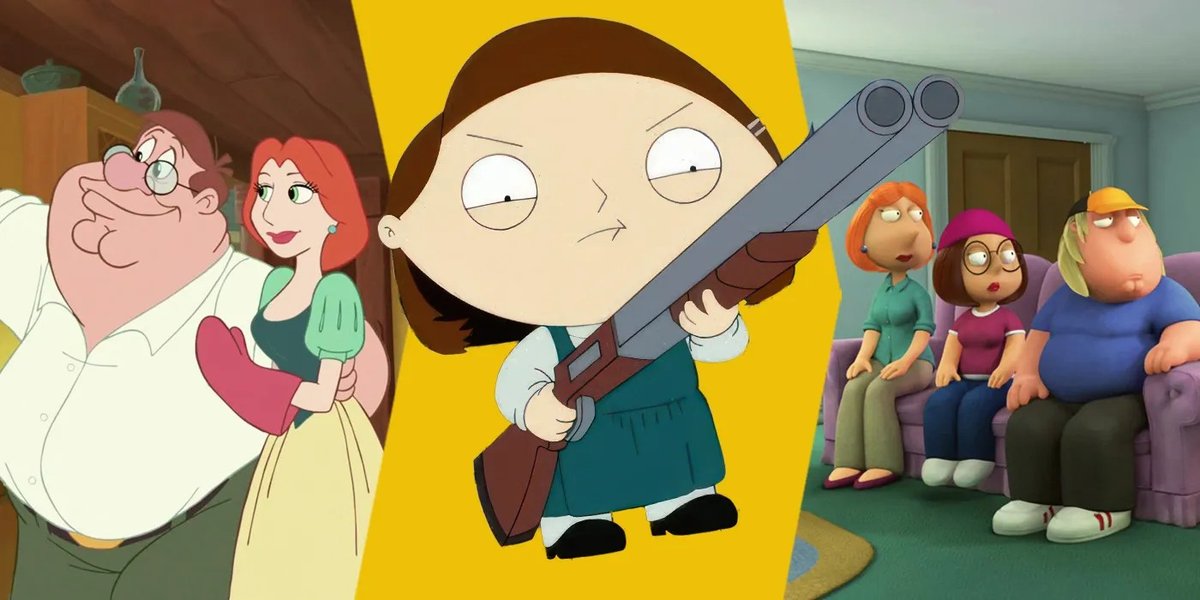
Family Guy isn't just a show; it's a pop culture institution, a chaotic symphony of cutaway gags, satirical jabs, and the most dysfunctional family on television. Since its premiere in 1999, Seth MacFarlane’s brainchild has defied cancellation and continued to churn out hundreds of episodes, cementing its place as a fan-favorite, albeit often controversial, animated comedy. But with so many installments, which ones truly stand out? Which Family Guy episodes are Fan-Favorite & Cult Classic Family Guy Episodes, earning their stripes as essential viewing?
It's a delightful, often cringe-worthy journey to uncover the episodes that truly resonate with audiences, whether for their sheer audacity, their surprising heart, or their razor-sharp (and sometimes blunt) commentary on society. These are the episodes that spark debates, fuel memes, and remind us why we keep coming back to Quahog, Rhode Island.
At a Glance: Your Guide to Family Guy's Top Episodes
- Defying Expectations: Discover how Family Guy resurrected itself from cancellation to become a global phenomenon.
- The Power of Parody: Explore episodes that expertly satirize everything from Star Wars to Stephen King.
- Stewie & Brian's Road Trips: Dive into the iconic adventures that define one of animation's best duos.
- Meta-Commentary & Social Satire: Unpack how the show skewers Hollywood, politics, and cancel culture.
- Unexpected Heart: Find the rare moments of genuine emotion hidden amidst the chaos.
- Where to Watch: Learn where you can stream these classics and more today.
Family Guy's Enduring Legacy: More Than Just Cutaways
Family Guy has always been a show that pushes boundaries, often swinging for the fences with its humor – sometimes landing a home run, sometimes striking out spectacularly, but always making noise. Created by Seth MacFarlane, the series centers on the delightfully dysfunctional Griffin family: patriarch Peter, his long-suffering wife Lois, their awkward daughter Meg, lovable oaf son Chris, their highly intelligent, martini-swilling dog Brian, and the diabolically brilliant, matricidal infant Stewie.
The show first premiered in 1999, quickly gaining a loyal following thanks to its rapid-fire jokes, non-sequitur cutaways, and often edgy humor. Despite its initial popularity, it was famously canceled after its third season. However, a surge in DVD sales and strong ratings in syndication on Adult Swim proved its undeniable appeal. This grassroots fan movement led to a triumphant return in 2005 with its fourth season, bigger and more popular than ever. This comeback is a testament to its dedicated fanbase and the unique brand of humor it brings to the table. Over the years, Family Guy has garnered multiple Emmy nominations, particularly for its innovative animation and stellar voice acting. Today, you can catch up on all the Griffin family's antics by streaming the series on Hulu in the U.S.
But what keeps fans coming back for hundreds of episodes? It's the unique blend of pop culture pulse and satirical outlook, a willingness to tackle controversial topics (often clumsily, sometimes brilliantly), and a surprising capacity for character development, particularly in its beloved "Road to..." episodes. Let’s dive into the cult classics and fan favorites that define the Family Guy legacy.
The Episodes That Defined a Decade (or Two): Early Classics & Foundational Storytelling
Some episodes don't just entertain; they lay the groundwork for everything that follows. These early standouts established Family Guy's voice, its characters, and its unique comedic rhythm, earning their place as fan favorites.
"Da Boom" (Season 2, Episode 3)
When Peter Griffin, fearing the Y2K bug, forces his family into a basement, it quickly spirals into a post-apocalyptic nuclear hellscape. What follows is classic early Family Guy: high-concept absurdity, Peter's misguided leadership as the temporary mayor of "New Quahog," and crucially, the introduction of the long-running, intensely violent, and hilariously pointless Peter vs. Giant Chicken rivalry. It’s an imaginative, over-the-top ride that showcases the show's willingness to go anywhere for a laugh.
"E. Peterbus Unum" (Season 2, Episode 18)
In a stroke of pure, charmingly immature genius, Peter discovers a legal loophole and establishes his own sovereign nation, "Petoria," within his household. This high-concept premise is a perfect example of early Family Guy's willingness to embrace absurdity and run with it, creating a truly memorable and utterly ridiculous scenario that pits Peter against the entire world. It's a reminder of the show's roots in playful, boundary-pushing comedy.
"Road to Rhode Island" (Season 2, Episode 13)
This episode wasn't just an episode; it was the episode that launched a franchise within a franchise. The very first of many Brian and Stewie "Road to" adventures, it sees the unlikely duo embark on a cross-country journey. Beyond the memorable musical number, the episode offers a surprisingly poignant B-plot where Brian seeks closure by learning about his origins at a puppy mill. It established a recurring, beloved format for the series, proving that Family Guy could deliver both irreverent humor and genuine character development.
"Death Is a Bitch" (Season 2, Episode 6)
One of the show's most iconic recurring characters makes his unforgettable debut here. When Peter causes the personification of Death to break a leg, he's forced to temporarily take over reaping human souls. The episode's dark humor is elevated by the late Norm Macdonald, who lends his uniquely deadpan voice to Death, creating a character that is both terrifying and side-splittingly funny. It's a masterclass in blending the macabre with the comedic.
"Brian Wallows and Peter's Swallows" (Season 3, Episode 17)
Often highlighted as an anomaly, this episode stands out for its unexpected heart. While Peter becomes a reluctant father figure to baby birds nesting in his beard, the main plot sees Brian forming a poignant connection with an old woman during his community service. It’s a sentimental episode that reminds viewers that even amidst the show's typical raunchiness, Family Guy occasionally allows for moments of genuine warmth and emotional resonance.
The Triumphant Return & Fourth Wall Breaks: Post-Cancellation Gems
Family Guy's cancellation was a dark moment for fans, but its return was nothing short of legendary. The episodes immediately following its revival often broke the fourth wall, reveling in the show's unlikely second chance and pushing its satirical edge even further.
"North by North Quahog" (Season 4, Episode 1)
The first episode after Family Guy's triumphant return, this installment immediately announced the show was back and bolder than ever. A brilliant riff on Alfred Hitchcock's North by Northwest, it featured fourth-wall-breaking humor about the show's cancellation and lampooned the movie business, including Mel Gibson and a fictional sequel to The Passion of the Christ. It was a confident, hilarious statement that Family Guy was here to stay.
"PTV" (Season 4, Episode 14)
This episode is a masterclass in meta-commentary and a direct response to real-world events. Peter reacts to new FCC censorship mandates by launching his own television network, PTV, filled with outrageous content. Lois, predictably, becomes concerned. The episode brilliantly lampoons FCC changes following Janet Jackson's infamous "wardrobe malfunction" and offers a surprisingly thoughtful (if still raunchy) meditation on censorship, entertainment, and artistic freedom. It’s a prime example of Family Guy at its most incisive.
"Petarded" (Season 4, Episode 6)
In an episode that perfectly encapsulates Family Guy's willingness to tackle sensitive subjects with irreverent humor, Peter is diagnosed as intellectually disabled and proceeds to exploit the diagnosis for personal gain. The episode's strength lies in its lampooning of Peter's selfish and often oblivious behavior rather than genuinely making light of developmental issues, sparking both laughter and inevitable controversy. It’s a classic example of the show’s push-the-envelope style.
"Road To..." Adventure Chronicles: Brian & Stewie's Unforgettable Journeys
The "Road to..." episodes became a cherished tradition, showcasing the unlikely but undeniable chemistry between Brian and Stewie. These often feature elaborate musical numbers, stunning animation, and surprisingly deep character moments.
"Road to the Multiverse" (Season 8, Episode 1)
Arguably the most ambitious of the "Road to..." episodes, this gem sees Stewie and Brian hopping through countless alternate universes before realizing they can't easily return home. The episode brilliantly explores different dimensions of Family Guy and its residents, offering glimpses into bizarre realities – including a classic one where dogs rule and humans are pets. It's a visually inventive and narratively clever exploration of "what ifs."
"Road to the North Pole" (Season 9, Episode 7)
This holiday special takes Brian and Stewie on another epic road trip, this time with Stewie determined to kill Santa Claus after a disappointing Christmas. As they journey to the North Pole, they learn about helping others and the dangers of human greed. The episode offers a genuinely uplifting message without sacrificing the show's signature raunchy appeal, making it a surprisingly heartwarming yet still very Family Guy holiday classic.
"Back to the Pilot" (Season 10, Episode 5)
Brian and Stewie once again utilize their time machine, traveling back to 1999, when Family Guy first premiered. Brian's attempt to warn his past self about the 9/11 attacks inadvertently causes a ripple effect, transforming their present world into a post-nuclear hellscape. This episode is a treasure trove of Easter eggs for long-time fans, referencing numerous previous episodes and offering a clever, if dark, exploration of causality and consequence within the Family Guy universe.
"Yug Ylimaf" (Season 11, Episode 17)
A true "love letter" to Star Trek-style storytelling, this episode sees Brian and Stewie embark on another adventure after Brian uses the time machine to impress women, threatening the spacetime continuum. The title itself ("Family Guy" backward) hints at the time-bending plot. Featuring numerous references to previous episodes, it’s a fun, self-aware romp through the show’s own history, highlighting the enduring appeal of the Brian and Stewie dynamic.
Parodies, Tributes & Pop Culture Masterpieces
Family Guy has always excelled at lampooning pop culture, often delivering shot-for-shot parodies that are both affectionate and utterly hilarious. These episodes are a testament to the show's sharp comedic writing and animation prowess.
"Blue Harvest" (Season 6, Episode 1)
This double-length episode is iconic. Serving as a meticulous, shot-for-shot parody of Star Wars: A New Hope, it flawlessly places Family Guy characters into iconic roles (Peter as Han Solo, Lois as Princess Leia, Chris as Luke Skywalker, Stewie as Darth Vader, Brian as Chewbacca, Meg as the trash compactor monster). It was so successful it spawned two equally brilliant follow-ups, parodying The Empire Strikes Back and Return of the Jedi, solidifying its place as a cornerstone of Family Guy lore.
"Leggo My Meg-O" (Season 10, Episode 4)
A brilliant parody of the Taken films, this episode puts Meg Griffin – often the family's punching bag – front and center. When Meg is kidnapped in Paris, Peter Griffin hilariously impersonates Liam Neeson, delivering an over-the-top performance that offers fantastic commentary on the revenge genre. It's a rare moment where Meg gets to shine, making it a fan favorite for those who appreciate her often-overlooked character.
"Three Kings" (Season 7, Episode 15)
With the explicit blessing of Stephen King himself, this episode puts a classic Family Guy spin on three famous adaptations of his work: Stand by Me, Misery, and The Shawshank Redemption. It features clever callbacks and humorous takes on iconic scenes, complete with cameos from actors like Richard Dreyfuss and Roy Scheider, who starred in the original films. It’s a respectful yet irreverent tribute to a literary master.
"And Then There Were Fewer" (Season 9, Episode 1)
The ninth season premiere delivered something truly unique: a feature-length murder mystery set at James Woods' cliffside mansion. Packed with guest stars like Drew Barrymore, Ashley Tisdale, and Patrick Stewart, the episode sees James Woods hilariously poke fun at his own Hollywood reputation as the Griffins and their friends are systematically picked off. It’s a cleverly constructed whodunit that offers a refreshing departure from the show's usual format.
"Meet the Quagmires" (Season 5, Episode 18)
Peter uses Stewie’s time machine to travel back in time, hoping to experience more of single life, but accidentally causes Quagmire to marry Lois. Peter must then restore the timeline, leading to surprisingly sweet scenes where he realizes just how lucky he is with Lois. It’s a great blend of classic Family Guy time travel shenanigans with a genuine, heartfelt message about appreciating what you have.
Satire & Social Commentary: When Family Guy Gets Topical (and Edgy)
Family Guy isn't afraid to take on current events, media institutions, and societal trends, often with a blunt instrument rather than a scalpel. These episodes showcase the show's satirical muscle, even if they occasionally ruffle feathers.
"FOX-y Lady" (Season 7, Episode 10)
Lois takes on a new career as a Fox News reporter, quickly learning about the stringent reporting restrictions concerning right-wing figures. The episode sharply satirizes the cable news landscape and its biases, while the B-plot features Peter pitching a hilariously absurd cartoon called Handi-Quacks. Guest stars including Seth Rogen, Fred Savage, and Peter Chernin add to the meta-commentary, making this a cutting look at media.
"Emmy-Winning Episode" (Season 16, Episode 1)
Seth MacFarlane, through Peter, vents years of frustration about the show never winning a Best Comedy Emmy. The entire episode is structured as various types of "Emmy bait," shamelessly ripping off qualities of award-winning shows from other networks (like Transparent or Modern Family). It’s a meta, self-aware, and brutally honest jab at the awards industry and Family Guy's perceived lack of critical recognition.
"McStroke" (Season 6, Episode 10)
This episode focuses on Peter suffering a burger-induced stroke and subsequently suing a fast-food chain. While providing plenty of dark humor, it's also notable for being produced during the WGA 2007–2008 strike, without Seth MacFarlane as a writer. Despite (or perhaps because of) this, it remains a memorable entry, particularly for its satirical take on corporate greed and legal battles. The B-plot, featuring Stewie attempting to become a popular high school student, is pure comedic gold.
"The D in Apartment 23" (Season 16, Episode 14)
In a highly relevant and timely episode, Brian attempts to gain attention on Twitter but gets "canceled" due to a racially charged joke. The episode follows his frantic attempts to convince a mob of his progressive credentials, offering sharp, if often cynical, commentary on cancel culture, social media outrage, and performative activism. It's a bold, contemporary piece of satire that captures the anxieties of the digital age.
"Stewie Loves Lois" (Season 5, Episode 1)
Despite the misleading title, the main plot of this episode involves Peter organizing the town against a doctor after a prostate exam he considers a sexual violation. While the title implies a focus on Stewie monopolizing Lois's attention, the episode's primary comedic energy comes from Peter's outrageous reaction and subsequent campaign, showcasing the show's willingness to use sensitive medical procedures for comedic fodder.
Deep Dives & Character Evolutions
While known for its static character traits, Family Guy occasionally allows its characters to evolve, face consequences, or reveal unexpected layers, creating some of its most impactful and memorable episodes.
"Stewie Kills Lois" (Season 6, Episode 4) / "Lois Kills Stewie" (Season 6, Episode 5)
This two-part saga is a pivotal moment for Stewie Griffin. After being called out for never following through on his threats, Stewie shoots and seemingly kills Lois. This leads to a gripping narrative where Peter is suspected of murder for insurance money. The second part, "Lois Kills Stewie," sees Stewie become a fugitive after his attempt is revealed, eventually taking over the nation. The arc brilliantly explores Stewie's identity crisis after achieving his life's ambition and features cameos from American Dad characters, along with meta-debates between Brian and Stewie about fake-out endings. It's a dark, ambitious, and utterly unforgettable storyline.
"The Thin White Line" (Season 3, Episode 1)
This two-part episode delves into one of Brian's most significant character arcs. Brian volunteers as a drug-sniffing dog for the police but tragically becomes addicted to substances himself. The episode tackles the serious issue of addiction with Family Guy's signature blend of humor and occasional gravitas. Meanwhile, Peter’s subplot, attempting to infiltrate a rehab facility by mistaking it for a swanky cruise, provides a comedic counterpoint.
"To Love and Die in Dixie" (Season 3, Episode 12)
When Chris witnesses a crime, the Griffin family is forced into witness protection in the American South. This episode delivers rapid-fire jokes targeting Southern culture and politics, showcasing Family Guy's early ability to craft nuanced (for them) character and storytelling while still delivering the irreverent humor it's known for. It's a prime example of the show using a change of scenery to fuel its comedic engine.
"Airport 07" (Season 5, Episode 12)
Peter, in his usual well-intentioned but disastrous manner, gets Quagmire fired from his airline pilot job. His attempts to help Quagmire find new work lead to a series of escalating events that endanger many lives. The episode is packed with classic cutaway comedy and cultural references, including a memorable cameo from Hugh Hefner, all while showcasing the chaotic ripple effect of Peter's decisions.
Crossovers & Landmark Events
Occasionally, Family Guy reaches beyond its own universe or creates events that are so grand, they become indelible parts of its history.
"The Simpsons Guy" (Season 13, Episode 1)
A monumental television event, this crossover episode sees the Griffin family, after Peter's offensive comic strip turns Quahog against him, end up in Springfield. The episode masterfully blends the distinct comedic styles of both shows, allowing Homer and Peter to bond (and then famously fight over beer). It's a fan-favorite spectacle that delivered on decades of anticipation, creating memorable interactions between two animated giants.
Why These Episodes Endure: The Cult Classic Factor
What makes a Family Guy episode a "fan-favorite" or "cult classic"? It's often a combination of factors:
- Quotability: Lines that stick and become part of the lexicon.
- Rewatchability: Episodes that reveal new layers or jokes with each viewing.
- Innovation: Pushing animation boundaries, narrative structures, or comedic formats.
- Cultural Commentary: Episodes that tap into the zeitgeist, however clumsily, and spark conversation.
- Character Deep Dives: Rare moments where beloved characters show growth, vulnerability, or face significant challenges.
- Sheer Audacity: Episodes that simply go for broke, regardless of potential offense, in pursuit of a laugh.
These episodes aren't just one-off gags; they contribute to the ongoing narrative of a show that continually reinvents itself while staying true to its chaotic core. They are the touchstones that fans revisit, recommend, and debate, confirming Family Guy's lasting impact on animated television.
Ready for a Rewatch? Diving into the Griffins' Best
Whether you're a long-time fan looking to revisit the classics or a newcomer trying to understand Family Guy's enduring appeal, these episodes offer a fantastic starting point. From the groundbreaking "Road to Rhode Island" to the meta-commentary of "PTV" and the epic parody of "Blue Harvest," you're in for a wild, unpredictable, and often uproarious ride.
The beauty of Family Guy's longevity lies in its willingness to evolve, sometimes subtly, sometimes dramatically, while maintaining its unique brand of irreverent humor. So, grab your remote, settle in, and prepare to laugh, cringe, and maybe even think a little. The entire series, including all these fan-favorite and cult classic episodes, is available to stream on Hulu in the U.S., making it easier than ever to dive into the comedic chaos. For a broader look at the series, check out our guide to the Best Family Guy episodes to watch. What are you waiting for? Quahog awaits.