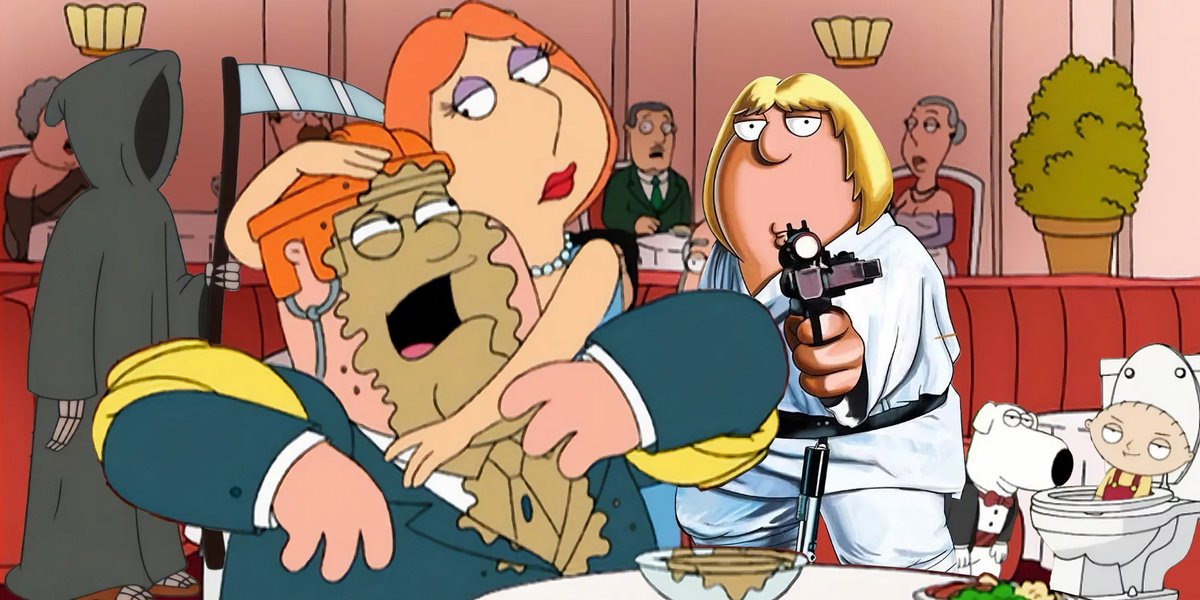
For a show often defined by its rapid-fire cutaways, irreverent humor, and a family that consistently pushes the boundaries of good taste, finding "critically acclaimed" Family Guy episodes might seem like an oxymoron to some. Yet, nestled within its vast catalog are true gems – episodes that transcend mere shock value, offering sharp satire, surprising emotional depth, or simply comedic brilliance that has resonated with critics and audiences alike. These aren't just one-off laughs; they're the moments that solidified Family Guy's place in animation history, demonstrating its capacity for clever writing, cultural commentary, and even a touch of heart.
Since its 1999 debut, Seth MacFarlane's creation has been a polarizing force, delighting fans with its pop culture references, visual gags, and often controversial takes, while sometimes drawing ire for its edginess. But through it all, Peter Griffin and his dysfunctional Quahog clan have endured, famously surviving an early cancellation after Season 3 to become one of television's longest-running animated series, still going strong towards its 23rd season in 2025. This longevity isn't accidental; it's built on a foundation of episodes that genuinely shine, proving the show's creative staying power. You can binge these standout moments and more on Hulu in the U.S.
At a Glance: What Makes These Episodes Stand Out
- Beyond the Gag: Discover how Family Guy transcends its reputation for crude humor to deliver sharp social commentary and inventive storytelling.
- A Masterclass in Parody: Explore episodes that lovingly (and hilariously) spoof iconic films and other animated series, showcasing the show's comedic range.
- The Heart of Quahog: Uncover surprisingly poignant and character-driven narratives that reveal the hidden depths of the Griffin family.
- Enduring Legacy: Understand how these standout episodes contributed to the show's remarkable comeback and long-term success.
The Defining Moments: Early Masterpieces & Comeback Kings
From its initial scramble to find its voice to its triumphant return after cancellation, Family Guy has a history marked by episodes that truly hit their stride, setting the standard for what the show could achieve. These are the installments that proved its comedic chops and cemented its unique identity.
"Da Boom" (Season 2, Episode 3; December 26, 1999)
Long before "Y2K" became a forgotten punchline, Family Guy capitalized on millennial panic with "Da Boom," an episode that boldly reimagined the turn of the millennium as a genuine apocalypse. Here, the world actually ends, setting the stage for Peter Griffin to assume mayoral duties in "New Quahog"—a role he, predictably, butchers with hilarious incompetence. This early episode is a crucial stepping stone, showcasing the show's willingness to embrace high-concept plots and fully commit to absurd scenarios.
Beyond its clever premise, "Da Boom" also marks two pivotal moments in Family Guy history: the introduction of Mila Kunis as the new voice of Meg, bringing a fresh dynamic to the long-suffering character, and the very first, legendary Peter vs. Giant Chicken fight. This inaugural brawl wasn't just a random gag; it initiated one of the show's most iconic and enduring recurring bits, a testament to the episode's lasting impact on the series' DNA. It's a foundational episode that really let Family Guy flex its comedic muscles and signal its unique brand of humor.
"Death Is a Bitch" (Season 2, Episode 6; 2000)
Family Guy has a knack for taking mundane situations and twisting them into fantastical narratives, and "Death Is a Bitch" is a prime example. When Peter, in typical fashion, tries to dodge a hospital bill by faking his own death, he summons Death himself. But this isn't the grim reaper you know; voiced by the late, great Norm MacDonald, Death is a masterclass in dry wit and sardonic disinterest, instantly becoming a fan-favorite recurring character.
The true genius of the episode unfolds when Death gets injured and is forced to shack up with the Griffins. His incapacitation throws the world into chaos: no one can die. This high-concept premise allows for some truly silly and unforgettable moments, including an imagined scenario of Adolf Hitler hosting a talk show. MacDonald's understated, sarcastic performance elevates the material, making Death less a harbinger of doom and more a reluctant, cynical houseguest, perfectly embodying the show's brand of dark, silly humor.
"E. Peterbus Unum" (Season 2, Episode 18; 2000)
Few shows would dare to take a premise as utterly foolish as "Peter sets up his own sovereign nation" and push it to its absolute limits, but "E. Peterbus Unum" does just that, and with gleeful abandon. When Peter discovers his property isn't technically part of the U.S. (after a bizarre legal loophole involving a map), he declares independence, renaming his household "Petoria."
This early, high-concept episode thrives on its commitment to the bit, gleefully escalating the consequences of Peter's immature decision-making. From declaring war on other nations to the U.S. government intervening, the absurdity builds with each scene. It's an episode that perfectly encapsulates Family Guy's early charm, demonstrating its ability to weave a complex, yet utterly ridiculous, narrative around Peter's childlike whims, making his immaturity almost endearing.
"North By North Quahog" (Season 4, Episode 1; 2005)
The return of Family Guy after its initial cancellation was nothing short of miraculous, fueled by robust DVD sales and strong Adult Swim ratings. "North By North Quahog" wasn't just a comeback episode; it was a statement. This Season 4 opener confidently re-established the show's voice and vision, setting the tone for its wildly successful future.
The plot itself is a thrilling, Hitchcockian adventure: Peter and Lois inadvertently stumble upon a sequel to Mel Gibson's The Passion of the Christ—reimagined as a buddy action movie, no less—and find themselves on the run from the dangerous director himself. The episode is packed with meta-humor, including Peter breaking the fourth wall to lampoon Fox's history of canceling shows, a clear nod to their own survival. Beyond the celebrity lampooning and movie business satire, it also features memorable moments with Stewie and Brian acting as parents, adding another layer of comedic brilliance and solidifying the dynamic duo's potential for future escapades.
Sharp Satire & Social Commentary at its Finest
Family Guy, at its best, isn't just about random gags; it's a vehicle for biting social commentary and a critique of everything from television censorship to societal absurdities. These episodes stand out for their incisive wit and fearless approach to sensitive topics.
"PTV" (Season 4, Episode 14; 2005)
Widely considered one of Family Guy's greatest achievements, "PTV" is a tour de force of animated satire. The episode brilliantly articulates the frustrations of network television censorship, a topic close to the show's heart given its own history of pushing boundaries. When Peter starts his own cable network, broadcasting uncensored content, the FCC swiftly intervenes. But their censorship doesn't stop at the airwaves; it spills into Peter's everyday life, absurdly dictating everything from what he can say to what his family can wear.
"PTV" builds in ridiculousness with perfect comedic timing, balancing its crude humor with sharp, pointed commentary. It's consistently hilarious, yet underneath the rapid-fire jokes and visual gags lies a genuine critique of overzealous moral guardians and the stifling effect of censorship. The episode’s daring, self-referential nature, and its willingness to directly address the creators' own battles, make it a standout piece of animation and a masterclass in satirical writing.
"Petarded" (Season 4, Episode 6; 2005)
Family Guy often walks a fine line with its humor, and "Petarded" is a prime example of the show daring to tackle a sensitive subject with its characteristic bluntness, yet managing to remain funny and thought-provoking. The episode sees Peter discover he is, by medical definition, intellectually disabled. Initially, Peter exploits this newfound knowledge for personal gain, leveraging his diagnosis to get away with outrageous behavior.
However, the episode deftly navigates the potential for crassness, ultimately exploring the consequences of Peter's actions. It's edgy and crude, undoubtedly, but it generally works because it understands how to walk the line, pushing boundaries without completely crossing into offensive territory. "Petarded" showcases the show's ability to extract humor from uncomfortable truths and societal perceptions, proving that even with its controversial premise, it can deliver insightful, albeit irreverent, commentary.
"12 And A Half Angry Men" (Season 11, Episode 6; 2012)
A direct and brilliant parody of the classic film 12 Angry Men, this bottle episode gathers an unlikely jury of fan-favorite Family Guy characters, all tasked with deciding whether a man is guilty of murder. Brian, ever the intellectual (or at least he thinks he is), finds himself as the lone holdout for "not guilty," mirroring Henry Fonda's iconic role.
The episode expertly maintains the tension and structure of its source material while injecting it with Family Guy's signature brand of ridiculous humor. The confined setting allows for focused character interactions and sharp dialogue, showcasing the distinct personalities of Quahog's bizarre residents. The writing ensures that the parody never takes itself too seriously, culminating in a terrific punchline where Peter realizes his jury duty was actually for the following day. It's a testament to the show's writing team that they can craft such a successful parody while still delivering genuine laughs.
Epic Adventures: The "Road To..." Episodes & Beyond
The "Road to..." episodes, starring the dynamic duo of Stewie and Brian, are a cornerstone of Family Guy's critical success, often allowing the show to explore more imaginative and ambitious storylines. These episodes transport viewers to fantastical realms and alternative realities, pushing the boundaries of what an animated sitcom can do.
"Road to the Multiverse" (Season 8, Episode 1; 2010)
If there's one thing Family Guy does well, it's seizing an opportunity for creative chaos, and "Road to the Multiverse" is an absolute masterclass in this. This "Road to..." episode sends Stewie and Brian hurtling through various parallel universes, each more bizarre and inventive than the last. From a world where everyone has two heads to a hyper-realistic universe, and even one where Christianity never existed, the writers gleefully explore every wild scenario imaginable.
The episode is a blast to watch precisely because it fully commits to its premise, using the multiverse concept as a canvas for boundless creativity. It's a visually stunning and conceptually ambitious outing that allows the show to playfully experiment with different animation styles and storytelling conventions, all while keeping the core comedic chemistry between Brian and Stewie front and center.
"Road To The North Pole" (Season 9, Episode 7; 2010)
While Family Guy is rarely lauded for its sentimentality, "Road To The North Pole" proves that the show can indeed deliver a compelling holiday story, albeit one steeped in its signature dark humor. This Christmas-themed "Road to..." adventure sees Stewie, disillusioned with Santa Claus, embark on a mission to kill him, with a reluctant Brian in tow.
Despite the festive setting, this is arguably one of Family Guy's darkest comedic episodes. It portrays a harrowing, almost dystopian truth about North Pole life and features grim, often desperate attempts at present delivery. Yet, amidst the bleak humor, the episode is punctuated by genuinely great musical numbers, a hallmark of MacFarlane's touch. It's a surprisingly complex and memorable holiday special that stands as the show's best, challenging expectations of what a Christmas episode can be.
"Back to the Pilot" (Season 10, Episode 5; 2011)
In a brilliant homage to Back to the Future, "Back to the Pilot" sees Stewie and Brian travel back in time to the very first episode of Family Guy. Naturally, they inadvertently mess with the timeline, creating a drastically altered future. This episode cleverly leverages the show's own evolution for comedy, contrasting its early animation and characterizations with its present-day iteration.
The true audaciousness, however, comes from its decision to tackle the incredibly risky premise of preventing 9/11. The episode navigates this delicate subject with surprising maturity for Family Guy, exploring the complex and often worse consequences that ripple through time if such a pivotal event were erased. It’s a testament to the writers' confidence and skill that they could pull off such a premise, making for an incredibly engaging and thought-provoking time-travel story.
Pop Culture Love Letters & Crossover Spectacles
Family Guy has always thrived on its ability to dissect, spoof, and lovingly lampoon pop culture, often dedicating entire episodes to elaborate parodies or even audacious crossovers that bring different animated worlds together.
"Blue Harvest" (Season 6, Episode 1; 2007)
Released to celebrate the 30th anniversary of Star Wars: A New Hope, "Blue Harvest" is the first and arguably best installment of Family Guy's epic Star Wars parody trilogy. This double-length episode brilliantly recreates the original film shot-for-shot, but with the entire Family Guy cast stepping into iconic roles: Chris as Luke Skywalker, Lois as Princess Leia, Peter as Han Solo, Brian as Chewbacca, Quagmire as C-3PO, and Stewie, menacingly, as Darth Vader.
More than just a simple retelling, "Blue Harvest" functions as a witty love letter to Star Wars, packed with countless Easter eggs, inside jokes, and a meta-awareness that only Family Guy can deliver. It’s a masterclass in parody, showcasing the show's deep understanding of the source material while infusing it with its own unique brand of humor. It remains the gold standard for animated Star Wars spoofs.
"The Simpsons Guy" (Season 13, Episode 1; 2014)
Few television events could generate as much buzz as a crossover between two animated titans, and "The Simpsons Guy" delivered on that promise, pitting Family Guy against The Simpsons. The episode begins with Peter's offensive comic strip causing an uproar in Quahog, forcing the Griffin family to flee and, by chance, land in Springfield.
Initially, the two families find common ground and even friendship, but naturally, conflict arises—specifically, Peter and Homer's iconic fight over beer. The episode is packed with memorable moments, from Stewie's unsettling obsession with Bart to Meg's saxophone playing making Lisa jealous, and the instantly quotable Ralph Wiggum line, "I'm in danger." While some crossover events can feel forced, "The Simpsons Guy" felt earned, celebrating the legacies of both shows while delivering big laughs and a surprisingly epic confrontation.
Exploring the Griffin's World: Character Deep Dives & Narrative Twists
While often leaning into broad comedy, Family Guy isn't afraid to peel back the layers of its characters or twist its narrative into unexpected directions, offering episodes that delve into their lives with surprising depth or high-stakes drama.
"Brian Wallows and Peter's Swallows" (Season 3, Episode 17; 2002)
In an unexpected departure from its usual irreverence, "Brian Wallows and Peter's Swallows" showcases a genuinely sentimental side of Family Guy that often goes unnoticed. The episode features two distinct, yet equally touching, storylines. Brian, serving community service, forms an unlikely and genuinely sweet connection with an elderly woman, revealing a compassionate side often buried beneath his cynical exterior.
Meanwhile, Peter, in a bizarre but charming subplot, becomes a surrogate father figure to a trio of baby birds who have made a nest in his beard. This segment, while typically grotesque in its premise, evolves into a surprisingly tender exploration of parental affection. The episode as a whole is a one-off that stands out for its heart, proving that amidst the crass jokes, Family Guy is capable of delivering genuinely sweet and emotionally resonant storytelling.
"Stewie Kills Lois" (Season 6, Episode 4; 2007)
For years, Stewie Griffin's threats to kill his mother, Lois, were a running gag, a dark undercurrent to his precocious genius. "Stewie Kills Lois" finally paid off that infamous promise, delivering a shocking and exhilarating two-part episode where Stewie seemingly murders Lois. This dramatic shift allows Stewie to finally unleash his full, evil potential, meticulously setting in motion a plan to frame Peter for the crime.
The episode is packed with great gags and character moments, such as Joe dressing up as Lois (in a truly disturbing fashion) to investigate her disappearance. While the "death" is ultimately undone in the second part, the first half is a masterclass in building suspense and dark humor around a character's long-held ambition. It's a bold narrative move that showcases the show's willingness to take its recurring jokes to their most extreme (and hilarious) conclusions.
"Meet The Quagmires" (Season 5, Episode 18; 2007)
What if Peter Griffin had made different choices? "Meet The Quagmires" explores this very question in a clever homage to It's a Wonderful Life. After a mid-life crisis leads Peter to regret his early marriage to Lois, Death intervenes (again!) and shows him an alternate timeline where he never married her. The consequence? Quagmire, of all people, ends up marrying Lois, leading to a drastically different and less fulfilling life for Peter.
The episode expertly blends its expected raunchy jokes with a surprisingly sweet realization for Peter about how incredibly lucky he is to have Lois. It’s filled with clever references, including nods to Back to the Future, celebrity parodies, and even a Jetsons cameo. This episode is a fantastic example of Family Guy using a high-concept plot to explore character relationships and deliver a heartfelt message wrapped in its signature irreverent humor.
"To Love And Die In Dixie" (Season 3, Episode 12; 2002)
Taking the Griffin family completely out of their comfort zone, "To Love And Die In Dixie" transplants them to the Deep South when Chris witnesses a crime and they enter witness protection. This fish-out-of-water scenario provides fertile ground for humor as the family struggles and, in some cases, thrives, adjusting to Southern life.
Meg, shockingly, finds popularity, while Brian and Peter bond over building their own version of the General Lee. Stewie, ever the surprising talent, even discovers a knack for playing the banjo. The episode is a fun exploration of cultural clashes and family dynamics in an unfamiliar setting. It also marks a significant milestone: the memorable introduction of Mr. Herbert, the creepy elderly neighbor who would go on to become one of the show's most enduring and unsettling recurring characters.
Beyond the Laughs: Why These Episodes Endure
While Family Guy has often courted controversy, these critically acclaimed episodes reveal a show with remarkable versatility and depth. They're more than just collections of gags; they are thoughtfully constructed narratives that leverage animation to tell stories that would be difficult, if not impossible, in live-action.
They showcase the writers' courage to tackle taboo subjects, parody beloved franchises with both reverence and irreverence, and even occasionally tug at the heartstrings. These are the episodes that demonstrate Family Guy's secret sauce: its ability to transform from a crude joke machine into a clever satirist, a pop culture commentator, and, at times, a surprisingly insightful storyteller. They prove that critical acclaim isn't just for prestige dramas; it can also belong to a show that features a talking dog and a matricidal baby. If you're looking for the best of what Quahog has to offer, these episodes are a prime place to start your journey into the archives, showing exactly why this animated sitcom has cemented its place in television history and remains a subject of ongoing discussion and debate. For even more standout installments, check out this broader list of Best Family Guy episodes.
Common Questions About Family Guy's Acclaim
It's natural to have questions about a show as divisive yet enduring as Family Guy. Here are some common queries and clarifications about its critical reception.
Is Family Guy just shock humor?
While Family Guy certainly employs shock humor and often pushes boundaries, it's reductive to say that's all it is. As these critically acclaimed episodes demonstrate, the show also excels at sharp satire, clever parodies, intricate high-concept plots, and even moments of genuine character development and heart. The shock humor is often a vehicle for commentary or simply part of its distinct comedic style, but it's far from the only tool in its arsenal.
How did Family Guy get cancelled and then come back?
Family Guy was initially cancelled by Fox after its third season in 2002 due to inconsistent ratings and its expensive production. However, strong DVD sales and unexpectedly high ratings for its reruns on Cartoon Network's Adult Swim block proved its enduring popularity. This unprecedented fan demand convinced Fox to revive the show, leading to its triumphant return with "North By North Quahog" in 2005, a testament to its dedicated fanbase and unique appeal.
Does Family Guy still have good episodes after so many seasons?
Absolutely. While opinions on the show's consistency vary over its long run, Family Guy continues to produce critically well-received episodes and maintain its core audience. The writers often find new ways to satirize current events, experiment with storytelling formats, and develop the characters in unexpected ways. The fact that it's poised for its 23rd season in 2025 speaks volumes about its continued relevance and ability to still deliver quality content.
The Enduring Legacy of Quahog's Finest
The "critically acclaimed" label might not be the first thing that comes to mind when you think of Family Guy, but these episodes prove that the show is far more than just its most controversial moments or quick cutaways. They are a testament to the creative risks the series has taken, the comedic genius of its writing, and its unique ability to carve out a distinct identity in the crowded landscape of animated television.
From its early, audacious concepts to its intricate parodies and surprisingly heartfelt character studies, these episodes have not only entertained millions but have also cemented Family Guy's place as a cultural phenomenon. They offer a masterclass in how an animated show can evolve, recover from setbacks, and continue to push boundaries, all while remaining undeniably, hilariously itself. So next time you settle in for a viewing, consider revisiting these landmark episodes. You’ll not only find yourself laughing out loud, but you might also gain a renewed appreciation for the often-underestimated comedic craftsmanship behind Peter Griffin's iconic, albeit chaotic, world.